Shipping costs often begin with two measurements: how heavy a parcel is and how much space it occupies. A small carton of dense parts may weigh more than its size suggests. A large box of lightweight cushions can take up valuable space while weighing very little. Carriers may price either case differently, so using scale weight alone can lead to an unexpected quote. Small details matter.
This guide to How to calculate shipping weight and volume explains how to measure a parcel, calculate its cubic volume, and compare actual weight with dimensional weight. You’ll learn why the packed parcel matters more than the product alone, how to keep units consistent, and where a carrier’s dimensional divisor fits into the calculation. For example, measure the outer carton after sealing it, including bulging flaps or protective padding. A few centimeters can change the result.
There is no single divisor or rounding rule that applies to every service. Carrier methods can vary by route, package type, and service level, so confirm the current terms before booking. This is easy to overlook. Treat any online estimate as a starting point, not a promise. If your measurements seem unusually high or low, check them again; even careful measurements can be imperfect. With clear measurements and the right carrier rules, you can estimate shipment costs more reliably and choose packaging that protects the contents without wasting space.
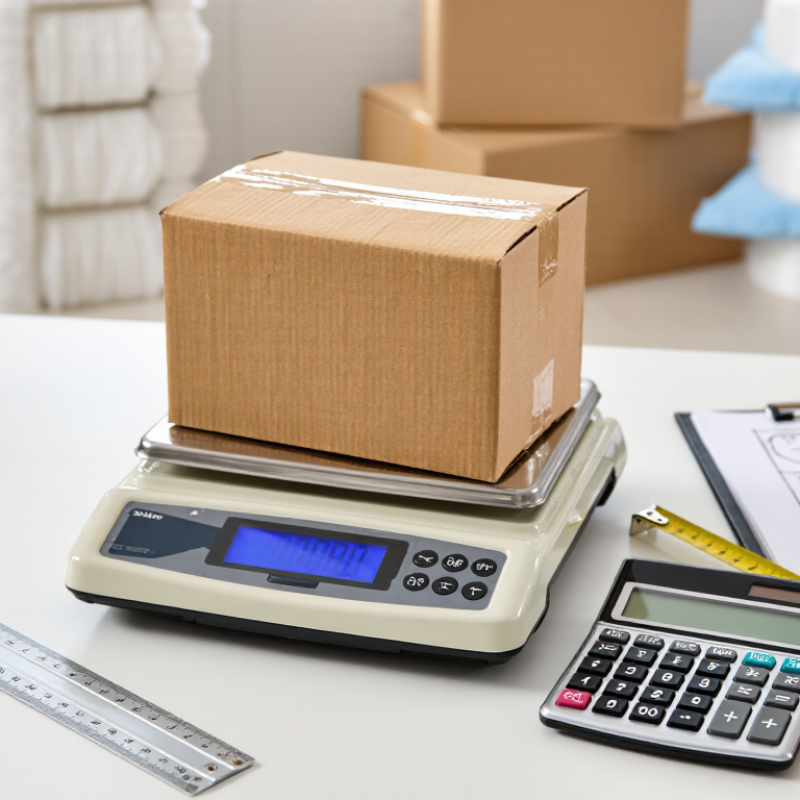
Shipping measurements describe both how heavy a parcel is and how much room it occupies. Actual weight is what a scale reads after the item and its packaging are packed together. Gross weight usually includes the goods, carton, cushioning, and pallet; net weight excludes packaging. Keep these terms distinct when comparing paperwork or checking a shipment. Measure twice. A small difference can change a quoted charge.
Volume is the space a shipment takes up. For a rectangular carton, multiply its outside length, width, and height using the same unit, such as centimeters, to find cubic centimeters. Dimensional weight converts that space into a billable weight using a carrier’s divisor. Divisors and rounding rules can vary, so check the applicable service terms rather than assuming one formula fits every shipment. Compare dimensional weight with actual weight; the higher figure may determine the charge. Include bulges, handles, and pallet edges in your measurements. Small gaps matter. In routine packing checks, the awkward part is often finding the true outermost point, not doing the multiplication. Record the units beside every figure, because a bare number is easy to misread.
For the 2026 shipping guide, measure the sealed package’s outer length, width, and height. Use the longest point on each side, including handles, seams, or bulging cardboard. A tape measure should sit straight against the box, not sag across it. Measure in centimeters or inches, and record each dimension clearly.
Multiply length × width × height to find cubic volume. For air cargo, IATA dimensional-weight guidance commonly uses 6,000 cubic centimeters per kilogram; service rules may differ. Compare dimensional weight with the package’s actual scale weight, since billing may use the greater figure. IATA reported that global air-cargo demand rose 11.3% in 2024, based on cargo tonne-kilometers. With shipments moving at that scale, a small measuring error can affect freight estimates. I still find oddly shaped parcels easy to misjudge; rechecking them is worth the extra minute.
Tips: Measure after taping the box shut. Round up only as your shipping service instructs. Photograph the measurements beside the package if another person will prepare the label.
Calculate the shipment’s actual weight with a calibrated scale after packing. Record the gross weight, including the box, cushioning, and pallet if applicable. Then measure the package’s outer length, width, and height at their widest points. A bulging flap can change the result. Small errors matter.
For air freight, a common estimate of volumetric weight is length × width × height in centimetres, divided by 6,000. A 60 × 40 × 35 cm carton occupies 84,000 cubic centimetres, or 14 kg of volumetric weight. If its actual weight is 11.8 kg, the chargeable weight may be 14 kg; confirm the carrier’s divisor and rounding rules, since they vary. IATA reported that global air cargo demand rose 11.3% in 2024, while capacity increased 7.4% (IATA, 2025 annual results). That makes careful measurement useful when space is constrained, though the statistic does not determine an individual shipment’s rate. A practical check is to measure twice and photograph the packed carton beside the measuring tape. The easy-to-miss weakness? Irregular shapes may be billed using their outermost dimensions, not their average footprint.
Dimensional weight estimates how much space a parcel occupies in a vehicle. Measure the outside of the fully packed box, including bulges and padding. Then multiply its length, width, and height. Divide that cubic measurement by the carrier’s divisor. The divisor depends on the carrier, service, and sometimes shipment type, so check the current rule before pricing.
For example, a box measuring 18 by 12 by 10 inches has a volume of 2,160 cubic inches. With a divisor of 139, its dimensional weight is about 15.5 pounds. If the carrier rounds up to the next whole pound, the rating weight becomes 16 pounds. If the parcel’s actual weight is 11 pounds, the dimensional figure may determine the charge. Rounding policies differ, so confirm them rather than assuming.
Small details matter. A loose flap can change a measured side, and a slightly oversized carton may add chargeable weight. Record dimensions after sealing the parcel, and use the same units required by the divisor. For metric measurements, use a divisor stated for cubic centimeters and kilograms; do not mix unit systems. I have found that rechecking one measurement often reveals a small mistake. It is easy to overlook. Compare the dimensional and actual weights, then apply the carrier’s stated billing method.
Compare actual weight with dimensional weight for sample parcels using a divisor of 5,000 cm³/kg.
Formula: Dimensional weight = length × width × height ÷ carrier divisor. In this example, dimensions are in centimeters and the divisor is 5,000 cm³/kg. Chargeable weight is generally the greater of actual and dimensional weight; rounding rules vary by carrier.
Shipping quotes can change when a parcel’s size matters as much as its scale weight. Measure the packed carton, not the empty box. Record its longest length, width, and height in the units required by the carrier. Then calculate dimensional weight using that carrier’s divisor. Divisors and rounding rules vary, so check the current service terms rather than relying on an old worksheet.
Compare the result with the parcel’s actual weight. The billable weight is generally the greater figure, after any required rounding. For example, a box weighing 4 kilograms may be charged at 7 kilograms if its dimensions produce a higher dimensional weight. Small measurement errors matter. A bulging flap or an extra centimeter can move a parcel into a higher billing bracket.
Before booking, verify the full shipping cost against the quote. Check the service level, destination zone, fuel or handling surcharges, and any residential or remote-area fees. Confirm that the package dimensions and weight were entered correctly. A quote is an estimate, not a promise. I would remeasure an awkward carton, especially when its edges are soft or uneven; that step can feel fussy, but skipping it may cause a later adjustment. Keep the measurements and quote together so you can question a charge with clear details.
It is the scale reading for the packed item, including its packaging. Gross weight may include the carton, cushioning, and pallet; net weight excludes packaging.
Multiply its outside length, width, and height using the same units. Include bulges, handles, and pallet edges. Measure twice.
It converts a shipment’s space into a billable weight using a carrier’s divisor. Divisors and rounding rules vary, so check the current service terms.
It is generally the higher of actual weight and dimensional weight, after required rounding. A 4-kilogram parcel may be billed at 7 kilograms.
An extra centimeter or a bulging flap may move a parcel into a higher billing bracket. Small gaps matter.
Confirm the service level, destination zone, package details, and any fuel, handling, residential, or remote-area fees. A quote is an estimate.
Keep the quote with the recorded measurements and weight. Check that the details were entered correctly before questioning an adjustment.
Soft or uneven cartons can hide their outermost edge. I would remeasure those, though it can feel fussy.
This guide explains How to calculate shipping weight and volume by first clarifying the measurements and terms used in shipping. Measure the package’s length, width, and height at their widest points, using the same unit for each measurement. Multiply these dimensions to find the package’s volume, and weigh the complete shipment to determine its actual weight.
Next, calculate dimensional weight by dividing the package’s volume by the carrier’s specified divisor. Compare this figure with the actual weight, since shipping charges are commonly based on the greater of the two. Before estimating the final cost, check that the measurements, units, divisor, and any rounding rules are applied consistently. These steps provide a practical way to estimate billable weight and understand how package size and weight can affect shipping costs.

LG Logistics