In the rapidly evolving landscape of e-commerce, understanding "How to optimize warehouse space for e-commerce" is critical. According to a recent report by the Warehousing Education and Research Council, optimizing warehouse space can improve efficiency by up to 30%. This statistic underscores the importance of intelligent space management in the warehousing sector.
Expert Tom McCaffrey, a leading consultant in logistics, emphasizes that “Maximizing every square foot of your warehouse can dramatically enhance your operational capacity.” His insights reflect a growing industry awareness that efficient space utilization is no longer optional; it’s essential for survival in a competitive market.
However, despite advancements, many warehouses still underutilize their space. Common pitfalls include poor layout planning and inadequate inventory management. Reflecting on these issues reveals opportunities for improvement. E-commerce businesses must prioritize innovative strategies, such as vertical storage and automated systems, to create a more efficient warehouse environment. Embracing these techniques can lead to significant improvements, but it requires ongoing evaluation and adaptation to meet evolving demands.
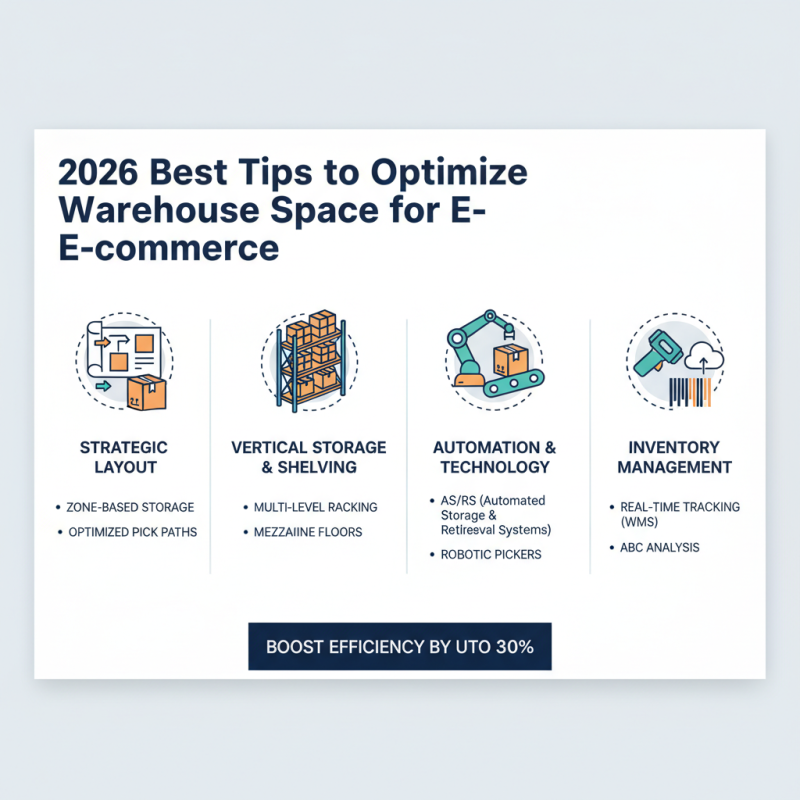
E-commerce has seen rapid growth, which puts pressure on warehouse space. According to a report by JLL, e-commerce warehouses now average 1.5 million square feet, reflecting the need for optimization. Current trends show that maximizing vertical space is crucial. Many warehouses are now using multi-level storage systems. This increases capacity without requiring additional square footage.
Data from the Warehousing Equipment Institute indicates a 30% increase in the use of narrow-aisle layouts. These layouts allow for more efficient use of space, enabling better inventory management. However, some warehouses still struggle with outdated designs. Inefficient layouts can hinder productivity and increase operational costs. Regular assessments of warehouse design and space utilization are essential to identify areas for improvement.
The focus on automation is also shifting warehouse space utilization. Many facilities are integrating robotics and automated storage systems. These technologies enhance efficiency but may require a significant upfront investment. Implementing such changes demands careful planning and execution. Therefore, it is important for operators to weigh the benefits against potential setbacks. Continuous evaluation is necessary to ensure that the evolving needs of e-commerce are met while making the most of available space.
In this chart, we illustrate key metrics to consider for optimizing warehouse space for e-commerce in 2026. The data visualizes the utilization rate, employee efficiency, order fulfillment speed, and inventory turnover rate, which are essential for improving overall warehouse performance.
When optimizing warehouse space for e-commerce, several key factors must be considered. A report from the Warehousing Education and Research Council (WERC) states that nearly 30% of warehouse space is often wasted due to inefficient layouts. Understanding how to effectively utilize vertical space can transform underused areas into productive zones. Racking systems, for example, can increase storage capacity by up to 50% when combined with efficient picking processes.
Another crucial aspect is the technology integration in warehouse management. According to a 2022 report by Logistics Management, warehouses utilizing automated systems saw a 20% improvement in space utilization. This underscores the importance of merging technology with traditional warehousing practices. However, it's essential to recognize that not all automation solutions fit every environment. Evaluating specific needs can lead to over or under-investment in technology.
Furthermore, employee training plays a significant role. Companies often overlook the impact of staff on space efficiency. Well-trained employees can optimize picking and packing processes, reducing congestion and maximizing space utility. Yet, many operations fail to invest adequately in ongoing training. This oversight can lead to suboptimal performance and wasted space in an already critical area.
Creating an effective layout is crucial for optimizing warehouse space, especially for e-commerce. A well-organized warehouse minimizes wasted space while maximizing efficiency. One effective strategy is to analyze product patterns. Identify best-selling items and house them close to the packing area. This reduces picking time and improves order fulfillment speed. Additionally, consider using vertical space. High shelving can free up floor space for larger items or staging areas.
Utilizing a zone layout can enhance workflow. Group similar items together. This method aids in inventory management and helps workers locate products quickly. However, this can lead to congestion if not regularly reviewed. Periodic assessments of layout effectiveness are essential. Don't hesitate to tweak the layout based on changing inventory or staff feedback.
Incorporating technology, such as warehouse management systems, can optimize layout planning. These systems can offer data-driven insights. Yet, relying too heavily on technology without regular manual checks may miss critical inefficiencies. Always maintain a balance between automated solutions and direct observations to ensure optimal space utilization.
Technological advancements in warehouse management are crucial for e-commerce growth. Automation can significantly change how businesses operate. A recent report from Logistics Management indicates that warehouses using automation improve storage efficiency by up to 30%. This creates a more accessible and organized environment.
Utilizing technologies like robotics and AI-driven inventory management can streamline operations. For example, autonomous mobile robots (AMRs) help in picking and transporting products. They reduce human error and speed up processes. Experts note that warehouses with AMRs see a 20% increase in order accuracy. However, integrating these technologies can be challenging and requires upfront investment. Many businesses struggle to balance initial costs with long-term benefits.
Investing in advanced storage systems is equally important. High-density shelving and vertical storage options maximize vertical space. According to a study by the Warehousing Education and Research Council, such systems can increase storage capacity by 50% without expanding the warehouse footprint. Yet, companies must regularly assess their storage strategies and employee training to fully reap the benefits. This ongoing evaluation process can lead to unanticipated challenges as operational needs evolve.
| Tip | Description | Impact on Storage Capacity | Technology Used |
|---|---|---|---|
| Implement Vertical Storage | Use taller shelving units and maximize vertical space. | Increases usable space by up to 40%. | Automated shelving systems |
| Optimize Picking Routes | Use software to determine the most efficient picking paths. | Reduces wasted time and enhances space utility. | Warehouse Management System (WMS) |
| Use Racking Systems | Implement pallet racks, cantilever racks, or drive-in racks. | Can increase storage density by 30% or more. | Space management software |
| Automate Inventory Management | Use barcodes and RFID technology for real-time inventory tracking. | Minimizes stock discrepancies and optimizes shelf space. | RFID systems, inventory management software |
| Implement Cross-Docking | Transfer products directly from incoming to outgoing shipping. | Reduces storage time and storage space needs. | Automated sorting systems |
Continuous monitoring and adapting warehouse operations is crucial for improving efficiency in e-commerce. According to a report by McKinsey, warehouses that implement real-time data analytics can increase their productivity by up to 30%. Monitoring space utilization regularly helps identify underperforming areas and allows adjustments to racking systems or layout. For instance, utilizing vertical space can lead to a 15% increase in storage capacity, which is significant in a highly competitive e-commerce sector.
Adapting to evolving customer demands is also critical. Data shows that 75% of e-commerce customers expect fast shipping. This pressure necessitates agile warehouse operations. By employing automated solutions, logistics firms can respond quickly to fluctuations in inventory. Yet, not all technology investments yield instant results. Many facilities struggle with integrating new systems. Hence, ongoing evaluation of technology effectiveness is vital.
Investing in employee training alongside technological upgrades can greatly enhance warehouse operations. Reportedly, companies that train their workforce can experience a 25% reduction in operational errors. However, even trained staff may resist adapting to new tools. It is crucial to create an environment where feedback is welcomed. Continuous improvement requires open lines of communication, enabling warehouses to stay responsive and competitive.
: E-commerce warehouses now average 1.5 million square feet. Multi-level storage systems are popular for maximizing vertical space.
Nearly 30% of warehouse space is wasted due to inefficient layouts. Optimizing space can significantly improve productivity and reduce costs.
Automated systems can improve space utilization by 20%. However, not all tech solutions suit every warehouse environment.
Well-trained employees can enhance picking processes. Many operations overlook training, which can lead to wasted space and reduced efficiency.
Regular assessments are essential. They help identify underutilized areas and inform necessary adjustments to layouts or racking systems.
Many facilities struggle with new system integration. Not all technology investments yield immediate results, and proper evaluation is crucial.
Fast shipping is expected by 75% of e-commerce customers. Agile warehouse operations are necessary to meet these demands effectively.
Yes, it can reduce operational errors by 25%. However, trained staff may still resist new technology, so communication is key.
Utilizing vertical space can lead to a 15% increase in storage capacity. This is vital in the competitive e-commerce landscape.
Real-time data analytics can boost productivity by up to 30%. Regular monitoring uncovers underperforming areas and informs necessary adjustments.
In today's rapidly evolving e-commerce landscape, understanding how to optimize warehouse space for e-commerce is crucial for operational efficiency. The article begins by analyzing current trends in warehouse space utilization, highlighting the importance of understanding key factors that influence optimization efforts. It emphasizes the need for an effective layout strategy to maximize available space, ensuring that goods are easily accessible while minimizing wasted areas.
Additionally, leveraging technology and automation plays a pivotal role in enhancing storage capacity, enabling businesses to streamline their operations. Continuous monitoring and adapting warehouse operations ensure that practices remain efficient and responsive to changing demands. By implementing these strategies, e-commerce businesses can significantly improve their warehouse management, leading to increased productivity and cost-effectiveness.

LG Logistics