Shipping weight and volume are crucial elements in logistics and supply chain management. Understanding **how to calculate shipping weight and volume** can significantly impact costs and delivery efficiency. This guide aims to demystify the calculation process, allowing businesses and individuals to navigate shipping challenges with confidence.
Accurate calculations help avoid unexpected fees and delays. Many overlook dimension weight, which can lead to overcharges. Regular errors include using incorrect dimensions or weight units. A simple miscalculation might cost money and time.
This process isn't just about numbers; it reflects your shipping strategy. Being precise means being prepared. As you explore methods, remember that every aspect counts. Your shipments deserve careful consideration.
Understanding Shipping Weight and Volume Concepts
Understanding shipping weight and volume is crucial for effective logistics management.
Shipping weight refers to the total weight of the package, including the product and packaging materials. When you prepare a shipment,
knowing this weight helps in calculating shipping costs accurately. It also affects the choice of carriers and methods.
There can be discrepancies if the packaging is too heavy compared to the product inside. This can lead to unexpected charges.
Volume is another essential concept. It refers to the space a package occupies. Measuring volume can be tricky,
especially with irregularly shaped items. Companies often use dimensional weight to calculate shipping costs based on volume.
If your product is lightweight but occupies a large space, shipping fees can still skyrocket. This means always measuring
length, width, and height before shipping.
It’s important to plan ahead. Some dimensions may change during the shipping process. Sometimes, packages may
look smaller than expected. Miscalculations can lead to losses. Regularly revisiting your shipping practices can help
avoid these pitfalls. Tracking your shipments can provide valuable data for future calculations.
Understanding these concepts deeply ensures effective shipping operations.
Methods for Measuring Shipping Weight Accurately
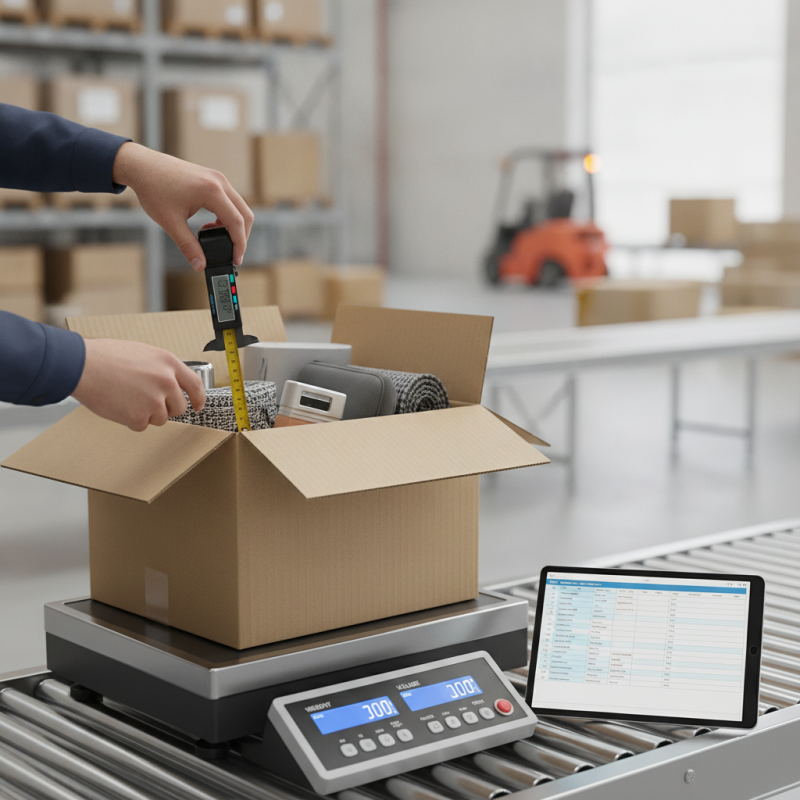
Accurate measurement of shipping weight is essential in logistics. Logistics data shows 25% of shipping errors stem from incorrect weight estimates. It can lead to unexpected costs or service delays. For precise measurement, a reliable scale is crucial. A digital scale with a weight capacity that exceeds your heaviest item is recommended.
Volume measurement is equally important. Many companies overlook the dimensions of their packages. According to industry reports, 68% of shippers do not measure volume accurately. Using a measuring tape, measure the length, width, and height of your package. Multiply these dimensions to find the volume. Ensure to round up to avoid underestimation. This will help create precise shipping labels.
Additionally, dimensional weight pricing is common. Carriers often use a formula based on volume. If the dimensional weight exceeds the actual weight, you may pay for the higher rate. Familiarizing yourself with this principle can save budget and enhance efficiency. Reflection on these practices can improve shipping strategies, ensuring your process remains competitive.
Calculating Volume Based on Package Dimensions
Understanding how to calculate volume based on package dimensions is crucial for shipping logistics. The formula for calculating volume is simple: multiply the length, width, and height of the package. This gives you the cubic measurement. Many overlook this essential step and often face unexpected shipping costs.
To ensure accuracy, always measure your package in inches or centimeters. Use a reliable tape measure for precision. A common mistake is not accounting for packaging material, which can add to the overall size. Adding cushioning materials or boxes can significantly change both the weight and volume.
Consider the implications of miscalculating volume. It could lead to overpaying for shipping services or damaging goods during transit. The goal is to get it right, but mistakes happen. Regular reviews of measurement processes can prevent errors. Checking against shipping guidelines can also improve reliability. This practice helps create a more efficient shipping strategy, ultimately saving time and money.
Factors Affecting Shipping Costs and Weight Considerations
Shipping costs are influenced by several factors, primarily weight and volume. The total shipping cost is often calculated based on both the actual weight and the dimensional weight (DIM weight). DIM weight considers the space a package occupies rather than just its weight. Freight providers typically use the greater of the two measurements to determine charges, making it crucial to accurately calculate both.
According to data from the Freight Transportation Research Institute, about 53% of shipping costs arise from weight-related factors. This highlights the importance of understanding how weight affects prices. For example, a parcel that is lightweight but bulky can incur higher charges due to its DIM weight. Each carrier may have different dimensional weight calculations, so it’s essential to verify their specific guidelines.
Moreover, packaging plays a significant role in creating cost-efficient shipments. Using the right box size can minimize unused space. However, oversizing packages can lead to unnecessary weight and extra costs. Even minor adjustments in packaging can affect the overall shipping budget. An analysis by the Institute of Logistics found that optimizing packaging can save businesses up to 15% on shipping costs annually. This requires ongoing evaluation and reflection on shipping practices to achieve better savings.
Best Practices for Optimizing Shipping Weight and Volume
Optimizing shipping weight and volume can lead to
significant savings and efficiency. Start by accurately measuring dimensions. Use precise tools like
calipers for small items and tape measures for larger ones.
Don’t forget to weigh your packages accurately. Sometimes, packages are assumed to weigh less than they do,
which can lead to misunderstandings.
Consider the packaging itself. Using
lightweight,
durable materials is key. Avoid oversized boxes, which can add unnecessary weight and volume,
inflating shipping costs. Balancing between protective packaging and minimizing weight is essential.
Experiment with different configurations. It may take time to find the right balance, and each product
may require a different approach.
Regularly assess your shipping processes. Analyze shipping data to identify trends. You might discover
that certain routes or carriers offer better rates depending on weight and volume. Make adjustments
based on data insights. While optimizing can be complex, these practices can enhance overall shipping
efficiency. Remember, even small changes can create a more
cost-effective shipping strategy.
FAQS
: Accurate weight measurement prevents unexpected costs and service delays in logistics.
Measure length, width, and height using a tape. Multiply these dimensions and round up for accuracy.
It's a pricing method based on volume. If dimensional weight is higher than actual weight, you pay the higher rate.
Use calipers for small items and tape measures for larger packages to ensure accuracy.
Use lightweight materials and avoid oversized boxes to minimize both weight and volume.
Analyzing shipping data can reveal trends, helping to identify better rates based on weight and volume.
No, assumptions can lead to misunderstandings and inaccurate shipping costs. Always weigh packages.
Yes, even minor adjustments can lead to significant improvements in cost-effectiveness and shipping strategies.
Balance between protection and weight. Different products may require unique packaging solutions.
Regular reviews help identify potential improvements. Staying informed can lead to better shipping decisions.
Conclusion
In the logistics industry, understanding how to calculate shipping weight and volume is crucial for efficient cost management. The article begins by explaining the fundamental concepts of shipping weight and volume, emphasizing the importance of accurately measuring these metrics to avoid unexpected charges. It provides detailed methods for measuring shipping weight, ensuring that businesses can determine the correct weight of their packages without error.
Furthermore, the article discusses how to calculate volume based on package dimensions, highlighting the formulae and considerations needed for precise calculations. It also identifies various factors that influence shipping costs, such as dimensional weight and handling charges. Finally, best practices for optimizing shipping weight and volume are outlined, helping businesses minimize expenses and improve their overall shipping strategy. By mastering these methods, companies can streamline their shipping processes and enhance profitability.

 LG Logistics