How to choose the best route for air cargo from China is not simply a search for the shortest flight. The right choice depends on your shipment’s origin, destination, dimensions, deadline, and tolerance for delay. A pallet leaving a factory in Shenzhen may have different practical options from a parcel collected in Chengdu. Direct flights can save time, but a connecting service may offer better capacity or a more suitable departure schedule. The cheapest quote is not always the lowest-cost option.
Niall van de Wouw, Xeneta’s Chief Airfreight Officer, has described air cargo as “the shock absorber of global supply chains.” That perspective matters when comparing routes: a reliable connection can help protect a delivery plan when demand shifts or capacity tightens. Ask forwarders to compare total charges, transit time, flight frequency, airport handling, and the time needed for collection and delivery. Check the actual cut-off time, too. Small details matter. A low rate can look convincing on a spreadsheet, yet a missed connection may erase the savings. No comparison is perfect; published schedules can change, and estimates need confirmation. Share accurate cargo details and request a route plan with clear assumptions. Then compare the trade-offs, not just the headline price.
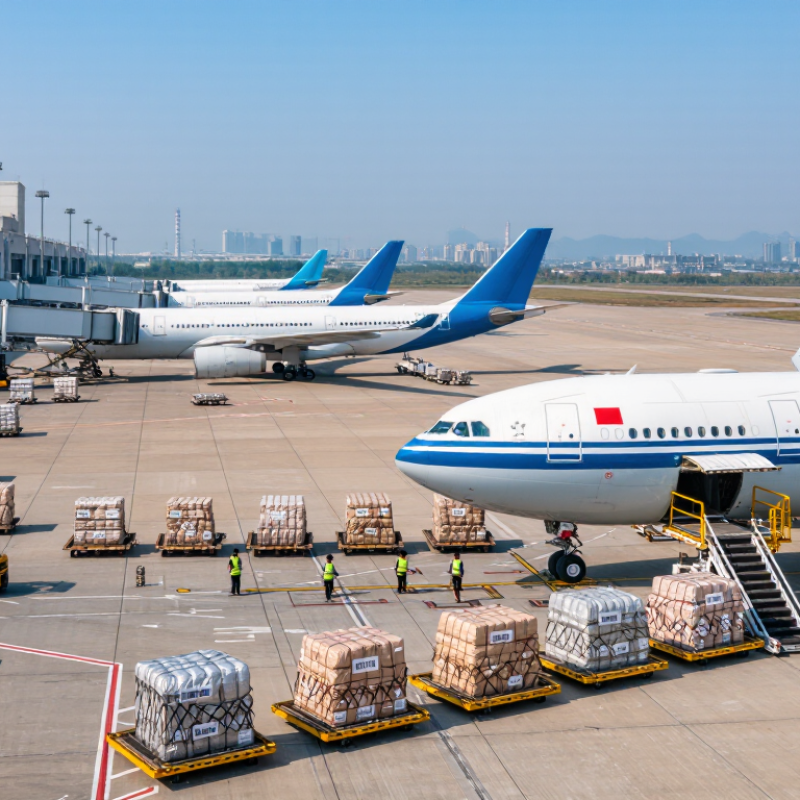
Before comparing routes, write down the cargo’s dimensions, gross weight, ready date, and delivery deadline. A carton measuring 60 × 40 × 35 centimeters may be charged by volume rather than scale weight. Confirm whether the quote includes pickup, export handling, destination fees, and final delivery. Missing one fee can distort the comparison.
Then decide what matters most: speed, schedule reliability, or cost. IATA reported that global air cargo demand, measured in cargo tonne-kilometers, rose 11.3% in 2024, while capacity increased 7.0%. These figures describe the global market, not every China-origin route, but they show why space and departure dates deserve attention. Compare direct and connecting options, and check actual flight days, booking cutoffs, and likely transfer time. A short flight plan is not always a dependable delivery plan. A spreadsheet can miss that. Recheck the assumptions with the forwarder.
Tips: Share the packed dimensions, not estimates. Ask for the latest cargo acceptance time and a written breakdown of charges. If the deadline is flexible, compare a faster service with a lower-cost option before booking.
Choosing an air cargo route from China
starts with matching airports to the shipment, not simply choosing the nearest city. Check whether the departure airport offers suitable cargo capacity, handling hours, and space for your shipment’s dimensions and weight. A factory near Suzhou might use Shanghai Pudong, but road time and warehouse cut-offs can outweigh a shorter flight. Small detail, big impact.
At the destination, consider how close the airport is to the delivery point and whether onward trucking is practical. Ask your freight forwarder about customs processing, transfer points, and the planned delivery route. An airport with frequent flights may still mean delays if cargo arrives after a warehouse cut-off or waits for ground handling. Get the schedule details in writing. Plans can change.
Compare door-to-door time and cost, not just the airfreight rate. Include pickup distance in China, export handling, destination terminal fees, and final delivery. For time-sensitive shipments, confirm the airport’s handling capabilities instead of assuming they are the same everywhere. A route may look efficient on paper, yet prove less convenient once truck schedules are considered. Recheck the details. The closest airport is not always the best fit.
When choosing an air cargo route from China, compare nonstop flights with connecting options, not just the quoted price. A nonstop flight usually reduces airport handling and can make delivery timing easier to predict. It may also cost more or have limited space, especially during busy shipping periods. That matters.
A connecting route can offer more departure choices and sometimes a lower rate. The trade-off is extra handling and a greater chance that a missed transfer or schedule change will delay the shipment. For example, a shipment from Shanghai to Frankfurt might travel nonstop or transfer through another airport. Actual schedules and available capacity change, so treat this as a comparison, not a fixed rule. Ask clearly.
Check the full transit estimate, including cargo acceptance cutoffs and time at the transfer airport. Confirm whether the quoted service is truly nonstop; “direct” can sometimes describe a journey that still includes a stop. Compare the same shipment details, service level, and delivery terms across quotes. A low price can look convincing, but it may not include the same handling or timing assumptions. I would also leave some buffer when the delivery date is important.
Typical airport-to-airport elapsed time for direct and one-stop China–Europe air cargo itineraries.
Indicative planning estimates: direct itineraries are often around 10–13 hours, while one-stop itineraries may take roughly 14–24 hours, depending on the route and connection. Times exclude customs clearance and origin or destination handling; check current schedules before booking.
How to Choose the Best Air Cargo Route from China?
Compare door-to-door transit time, not just flight duration. A direct flight may look fastest, but export handling, customs processing, and destination delivery can add days. For urgent cargo, ask forwarders for recent route-level schedules and typical delay ranges. For less time-sensitive shipments, a connecting route may offer a lower quote. Check what the quote includes: fuel surcharges, handling, screening, and final-mile delivery can change the real cost. Small print matters.
Capacity also shifts by season and direction. IATA reported that global air cargo demand rose 11.3% in 2024, while capacity grew 7.4%. Asia-Pacific demand increased 14.5%, against capacity growth of 11.3%, in its 2024 annual market review. These figures signal pressure, not a guaranteed shortage on every China route. I would not use annual growth alone to predict next week’s space; request current availability and a booking cutoff. A cheap rate is less useful if cargo misses the flight.
Match the route to the shipment’s dimensions, weight, packaging, and handling needs. Ask whether the aircraft and handling facilities can accept the cargo as packed, and confirm any temperature-control requirements in writing. Compare a few realistic options using the same shipment details. One estimate may still be imperfect: peak-season capacity and operational changes can alter both timing and price after booking. IATA, “2024 Air Cargo Market Analysis,” December 2024.
| Example Route | Typical Routing | Airport-to-Airport Transit | Indicative Airfreight Cost | Capacity Outlook | Cargo Restrictions and Checks | Best Suited For |
|---|---|---|---|---|---|---|
| Shanghai (PVG) to Los Angeles (LAX) | Nonstop or one-stop, depending on schedule and available space | 2–5 days | About US$4–8/kg | Generally strong; space may tighten during peak seasons | Confirm lithium battery classification and packing; oversized freight needs advance approval. U.S. customs clearance is separate. | Urgent shipments, electronics, and general cargo bound for the western United States |
| Shanghai (PVG) to Chicago (ORD) | Nonstop when available, or one-stop through an air cargo hub | 3–6 days | About US$4.50–9/kg | Moderate to strong; confirm allotment for larger consignments | Check commodity eligibility, dimensions, and stackability. Regulated goods require documents and carrier acceptance. | Shipments for central and eastern U.S. destinations where onward delivery is planned |
| Shanghai (PVG) to Frankfurt (FRA) | Nonstop or one-stop via a major European or Asian hub | 2–5 days | About US$3.50–7/kg | Generally strong on major lanes; seasonal demand affects availability | Provide accurate product descriptions and customs data. Batteries, dangerous goods, and temperature-sensitive cargo need prior checks. | Time-sensitive cargo for Germany and onward European distribution |
| Shenzhen (SZX) to Amsterdam (AMS) | Nonstop or one-stop, subject to flight schedule and capacity | 2–6 days | About US$3.50–7.50/kg | Moderate to strong; high-tech and e-commerce peaks can reduce space | Verify battery paperwork, packing standards, and any temperature-control requirements. Restricted goods need route-specific approval. | Electronics and consolidated shipments for the Netherlands and nearby markets |
| Guangzhou (CAN) to Dubai (DXB) | Nonstop or one-stop through a regional hub | 2–5 days | About US$3–6.50/kg | Moderate to strong; confirm space for heavy or bulky freight | Check local import rules and required paperwork. Dangerous goods and temperature-controlled products require advance acceptance. | Regional distribution to the Middle East and connections to nearby markets |
| Hong Kong (HKG) to London (LHR) | Nonstop or one-stop, depending on cargo type and available service | 2–5 days | About US$4–8/kg | Generally strong; space and pricing fluctuate with demand | Confirm export documentation, UK import requirements, and acceptance rules for batteries, liquids, and other regulated items. | Urgent freight and shipments that benefit from Hong Kong’s broad air cargo connectivity |
Notes: Transit times are typical airport-to-airport estimates and exclude export handling, customs clearance, and final delivery. Cost ranges are indicative planning estimates in US dollars per chargeable kilogram, not live quotes; actual rates vary by shipment weight, dimensions, season, fuel and security surcharges, routing, and available capacity. Always confirm the current schedule, price, and cargo acceptance rules before booking.
Before comparing air cargo routes from China, verify the import requirements for the destination country. Check the product’s HS code, import duties, required certificates, and document format with an official customs source or a qualified customs broker. Requirements can vary by product and destination, so do not rely on an old shipment file. Small mismatches matter. Make sure the commercial invoice, packing list, and transport details describe the goods consistently. Ask who will prepare each document and when customs information must be submitted.
Then compare routes by more than flight time. A direct flight may reduce handling, while a connecting route could offer more suitable departures or capacity. Check the departure and arrival airports, transit points, cargo cut-off times, and estimated customs processing arrangements. Confirm whether the carrier or your agent can support clearance at the destination, and ask what happens if a flight is delayed. For time-sensitive goods, a short connection can look attractive on paper but leave little room for disruption. The cheapest option is not always the most predictable. Share accurate shipment details before requesting quotes, and compare the same service scope across providers. I would still recheck the schedule before booking; published transit estimates can change.
Check cargo capacity, handling hours, and space for your shipment’s size and weight. A nearby factory may still use a farther airport if road time or warehouse cut-offs work better. Small detail, big impact.
Consider distance to the delivery address, customs processing, transfer points, and onward trucking. Ask when the cargo reaches the warehouse and whether it could miss the handling cut-off.
Compare the full journey, including pickup, export handling, customs, terminal processing, and final delivery. A short flight can still mean several extra days. Plans can change.
Not necessarily. Handling and delivery schedules can add time, even on a direct route. A connecting route may cost less for shipments with flexible deadlines.
Ask whether the price includes fuel surcharges, handling, screening, destination terminal fees, and final-mile delivery. Compare quotes using the same shipment details.
Ask for current availability, route schedules, and the booking cut-off. Capacity can shift by season and direction. Annual market growth alone cannot predict next week’s space.
Share the dimensions, weight, packaging, and handling requirements. Confirm that the aircraft and facilities can accept the cargo as packed. Put temperature-control needs in writing.
Treat them as estimates, since peak-season pressure and operational changes can affect both. Get schedule details in writing, then recheck them before booking. I may still overlook a small constraint.
Choosing the right air cargo route from China starts with a clear understanding of the shipment: its size, weight, destination, delivery deadline, and handling needs. Next, identify suitable departure and arrival airports, considering how easily the cargo can reach each airport and how close it is to the final destination. Comparing direct flights with connecting options can reveal useful trade-offs between speed, flexibility, and price.
To decide How to choose the best route for air cargo, evaluate estimated transit time, total shipping cost, available capacity, and any cargo-specific restrictions. Also confirm the customs documentation and procedures required for the shipment at both ends of the journey. By weighing these factors against your delivery priorities, you can select a practical route that balances reliability, timing, and cost without overlooking important operational requirements.

LG Logistics