10 Effective Tips to Streamline Last Mile Delivery

Time:2026-06-07 Author:Ethan
0%

In today's fast-paced e-commerce landscape, "How to streamline last-mile delivery" has become a crucial question for businesses. This final stretch of delivery often proves to be the most challenging and costly. Delivery delays can frustrate customers and damage brand reputation. Companies need to adopt effective strategies to enhance efficiency in this area.

Streamlining last-mile delivery requires a blend of technology and practical methods. For instance, leveraging real-time data can help in predicting delivery times. Additionally, using local distribution hubs can reduce travel distances. However, it's important to recognize that not every approach works universally. Each market has unique challenges, and what succeeds in one region might fail in another.

Businesses must be prepared to reflect on their strategies regularly. Customer feedback can provide valuable insights into areas needing improvement. Flexibility is key. The ever-evolving landscape requires constant adaptation to meet customers' expectations. Adopting innovative solutions while acknowledging the limitations will pave the way for more effective last-mile delivery.
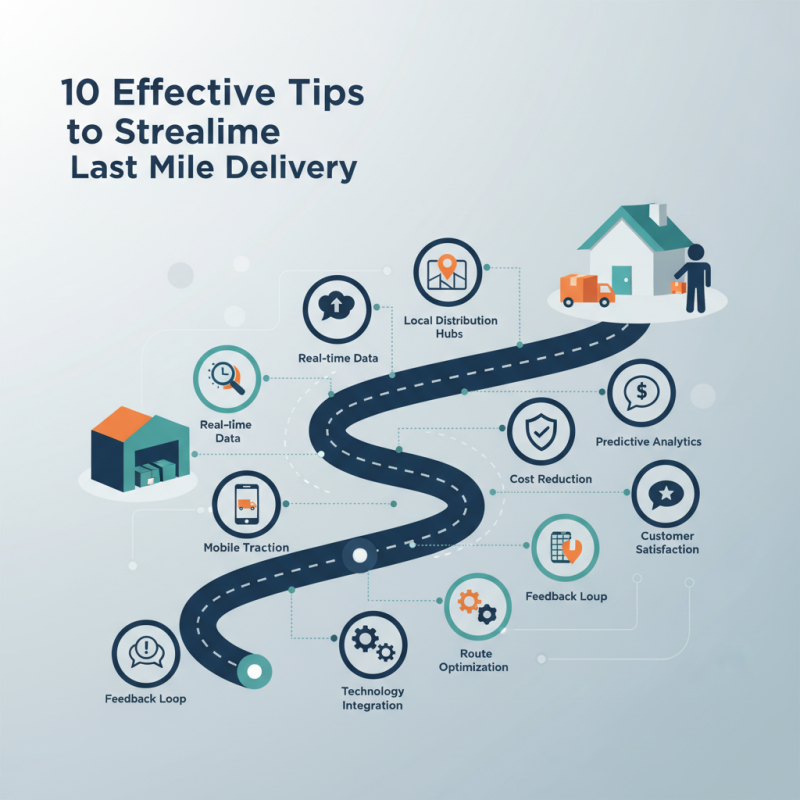
10 Effective Tips to Streamline Last Mile Delivery

Understanding Last Mile Delivery and Its Challenges

Understanding last mile delivery is crucial for businesses today. This phase involves transporting goods from a distribution center to the final destination. It presents unique challenges that can impact cost and efficiency. Poor delivery involves late arrivals, damaged items, and dissatisfied customers.

A key challenge is route optimization. Effective route planning can save time and resources. Using technology for real-time traffic updates is vital. This helps delivery personnel make quick adjustments. Drivers can take alternate paths to avoid congestion.

Another tip is to enhance communication. Clear updates can inform customers about their order status. This reduces anxiety about deliveries. Implementing feedback systems can also provide insights into delivery experiences. Learning from customer feedback is an effective way to improve services. Regular assessments can highlight areas needing improvement. Ultimately, understanding these factors can help businesses navigate the complexities of last mile delivery efficiently.

Optimizing Route Planning for Faster Deliveries

Last mile delivery is a crucial aspect of logistics, impacting customer satisfaction directly. Optimizing route planning can significantly enhance delivery speed. According to a report by the Logistics Management Association, efficient route planning can reduce delivery times by up to 20%. This not only increases customer loyalty but also reduces operational costs.

Technology plays a vital role in streamlining route planning. Utilizing advanced routing software allows companies to analyze traffic patterns, weather conditions, and delivery windows. A study from the National Institute of Standards and Technology reveals that companies using sophisticated routing technologies see a 15% improvement in efficiency. However, many logistics firms still rely on outdated methods, leading to delays and inefficiencies.

While data-driven solutions offer great promise, reliance on technology must be balanced with human judgment. Route optimization algorithms may overlook unique challenges, such as road closures or local events. Logistics managers must remain vigilant and ready to adjust routes dynamically. Balancing tech and human insight is essential for achieving optimal results in last mile delivery.

10 Effective Tips to Streamline Last Mile Delivery - Optimizing Route Planning for Faster Deliveries

Tip Number Tip Description Expected Outcome
1 Utilize route optimization software Reduced delivery time by 20%
2 Implement real-time tracking systems Increased customer satisfaction
3 Optimize delivery windows Higher delivery efficiency
4 Use crowd-sourced delivery options Lower delivery costs
5 Integrate with local hubs Faster pickups and drop-offs
6 Train delivery personnel on best practices Improved delivery accuracy
7 Leverage mobile delivery apps Enhanced operational control
8 Monitor delivery performance metrics Data-driven improvements
9 Establish return policies for efficiency Streamlined returns process
10 Maintain open communication with customers Increased trust and reliability

Implementing Technology Solutions for Tracking and Management

In today's fast-paced environment, last mile delivery remains a challenge. Implementing technology solutions can greatly enhance tracking and management. Real-time tracking systems provide visibility. They allow customers to see where their packages are at any moment. This transparency builds trust. Yet, the accuracy of GPS data can sometimes falter.

Mobile apps for delivery personnel streamline communication. They help drivers stay updated. However, many drivers struggle with app interfaces. This can lead to delays and frustration. A user-friendly design is essential for effectiveness. Integrating AI can optimize route planning. It minimizes delivery times. Nevertheless, reliance on technology may overlook local nuances, creating unexpected hurdles.

Adopting automated inventory management systems reduces errors. Businesses can maintain accurate stock levels. Still, some operators face resistance to change. Staff may feel overwhelmed by new tools. Continuous training is crucial for success. By embracing technology, companies can transform their last mile delivery approach. Yet, it requires careful planning and adaptation.

Enhancing Communication with Customers During Deliveries

Effective communication is crucial for enhancing customer satisfaction during last mile delivery. Customers often feel anxious about when their package will arrive. Transparent communication can alleviate their concerns. Sending real-time updates about a package's status keeps customers in the loop and builds trust.

Using various methods to provide information is essential. Text messages and notifications can be convenient for many. However, some customers may prefer phone calls. Flexibility in communication preferences allows for a more personalized experience. This approach shows customers that their needs are acknowledged.

Mistakes will happen along the way. Incorrect delivery times or lost packages can create frustration. Addressing these issues promptly and honestly is key to maintaining trust. Offering a quick resolution can turn a negative experience into a positive one. Reflecting on feedback from these situations helps improve future communications and delivery efficiency.

Last Mile Delivery Communication Efficiency

Training and Empowering Delivery Personnel for Efficiency

In the competitive landscape of last mile delivery, efficient training and empowerment of delivery personnel is crucial. Well-trained staff can handle unexpected challenges promptly. They develop problem-solving skills that allow them to navigate issues such as traffic delays or customer complaints. Empowering personnel with decision-making capabilities can significantly enhance service quality.

Investing in practical training sessions is essential. Simulations are an effective tool. Employees encounter real-world scenarios in a controlled environment. This helps them gain confidence and proficiency. Regular feedback sessions also allow staff to reflect on their performance. They can identify areas for improvement and celebrate their successes.

However, relying solely on training is not enough. Building a culture of trust and communication is vital. Staff should feel comfortable sharing their insights and suggestions. Encouraging this kind of feedback creates a more responsive and flexible delivery operation. When team members feel valued, their motivation increases, which directly impacts delivery efficiency.

FAQS

: What is real-time tracking in delivery systems?

: Real-time tracking gives customers visibility of their package location. They can see where it is at any moment.

How does technology improve communication with delivery personnel?

Mobile apps help drivers stay updated and streamline communication. However, some find these apps difficult to use.

What are the benefits of automated inventory management?

Automated systems reduce errors and help maintain accurate stock levels. But some staff may resist adopting new tools.

Why is effective communication important during delivery?

It alleviates customer anxiety about package arrival times. Transparency strengthens trust in the delivery process.

What should be done when a delivery issue occurs?

Address mistakes quickly and honestly. This can turn frustration into a positive customer experience.

How can businesses enhance customer satisfaction?

They can send real-time updates and offer flexible communication options. This shows customers their needs are acknowledged.

What challenges can arise from relying solely on technology?

Dependence on technology may overlook local nuances and create unexpected hurdles for deliveries.

Why is continuous training necessary for staff?

New tools can overwhelm employees. Ongoing training ensures they adapt effectively to technology changes.

How can companies reflect on past delivery experiences?

They should analyze feedback from mistakes to improve future communication and efficiency. This is often overlooked.

Conclusion

Last mile delivery remains a critical component of the logistics chain, facing various challenges that can hinder efficiency. To streamline last-mile delivery, businesses must first understand these challenges, including traffic congestion and varied customer expectations. Effective route planning can significantly improve delivery speed, reducing operational costs and enhancing customer satisfaction.

Additionally, the implementation of technology solutions such as real-time tracking systems can greatly aid in managing deliveries more effectively. Communication with customers is key; keeping them informed throughout the process fosters trust and improves their overall experience. Finally, training and empowering delivery personnel is essential to ensure they are equipped to handle challenges promptly and efficiently. By focusing on these strategies, companies can learn how to streamline last-mile delivery and achieve better operational outcomes.

Ethan

Ethan

Ethan is a seasoned marketing professional with a deep expertise in our company's innovative product line. With a passion for sharing knowledge and insights, he takes the lead in regularly updating our corporate blog, where he explores industry trends, product features, and effective marketing......