A parcel’s shipping bill is shaped by more than its weight. Carriers may also consider its size, shape, and handling needs. A half-empty box can take up valuable space, while oversized cushioning may increase a package’s measured dimensions. Why packaging quality affects shipping cost becomes clear when these details meet carrier pricing rules. A box that fits the product closely can reduce wasted space and help control dimensional charges. It can also keep items from shifting during sorting and delivery.
Good packaging is not simply the thickest box or the most padding. The right choice depends on the product’s weight, fragility, and route. A small ceramic mug, for example, needs room for protective cushioning, but too much space can let it move inside the carton. Movement can lead to damage. A crushed corner or torn seam may also trigger returns, replacement shipments, and extra handling. Those costs are easy to overlook when comparing packaging prices alone. Still, packaging cannot prevent every loss, and estimates may differ between carriers. Businesses should test their cartons with real products and review shipping invoices over time. A simple drop test helps. So does checking whether the packed item fits snugly, without pressure on fragile parts. Better packaging can lower avoidable costs, but it takes practical checks—and a willingness to revise choices that do not work.
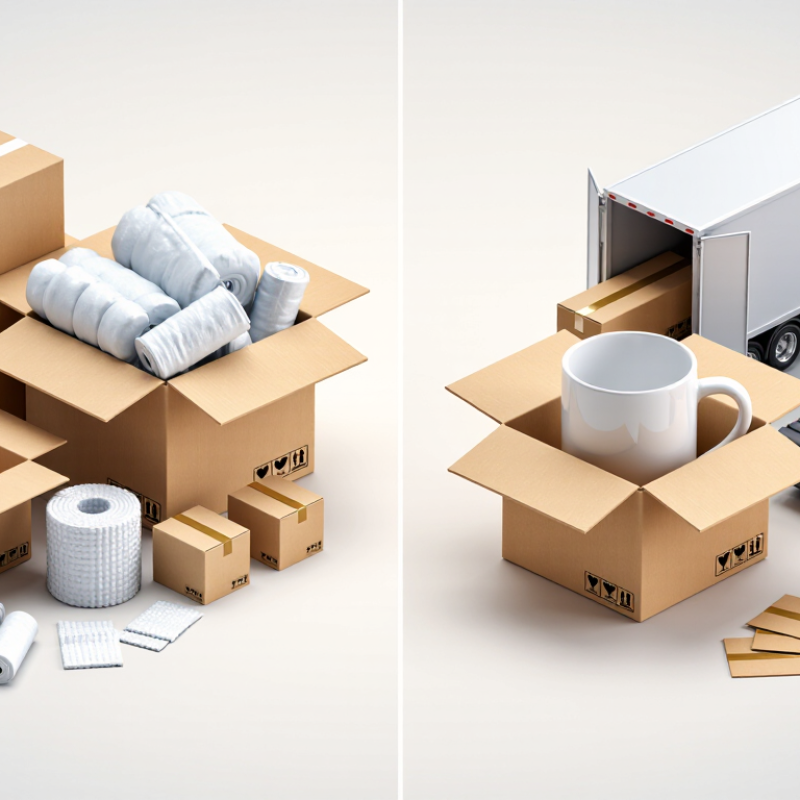
Packaging quality in shipping is not just a sturdy box. It is the fit between the product, cushioning, closure, and label. An efficient package holds the item still, keeps seams closed, and presents a readable, scannable label. ISTA’s transit-testing procedures assess hazards such as drops, vibration, and compression, which reflect common handling and stacking pressures. Scale matters: Pitney Bowes’ 2023 Parcel Shipping Index estimated 161 billion parcels moved worldwide in 2022. Every weak corner meets a lot of movement.
Quality also includes right-sized dimensions. Carriers may price parcels by dimensional weight, not only scale weight; FedEx’s Service Guide explains this method. A large empty carton can therefore cost more to ship than a compact one, even when the contents weigh little. Too little void fill invites impact; too much adds volume and material. Use a snug carton, cushioning on all sides, sealed seams, and a label on a flat surface. Then test representative packed orders, not just an ideal sample. It feels safer. Teams sometimes over-cushion for that reason, but the assumption deserves a shipping-cost check. Measure damage, dimensional weight, and repacking time together; a passable package can still waste space.
Freight rates rarely depend on scale weight alone. A large carton holding a light item can cost more than a compact, heavier parcel because carriers may charge dimensional weight. They compare package volume with actual weight and bill according to their rate rules. A 40-by-30-by-25-centimeter box can occupy valuable truck or aircraft space, even if it holds only folded fabric. Exact formulas vary by carrier, service, and route, so check current rate guides before estimating costs. Small differences matter.
Right-sized packaging can lower billed volume without sacrificing protection. For example, replacing an oversized box with a snug carton may reduce dimensional weight across hundreds of orders. Yet a box that is too small can crush corners or leave fragile items exposed. That adds up. A practical packing test can compare carton sizes, scale readings, and damage after a sample shipment. The results may be less tidy than expected: one size saves space but needs extra padding, adding weight and labor. Packaging decisions involve trade-offs, not just choosing the smallest box. Weigh and measure the sealed package, including bulges and protective inserts, since those details affect the final freight calculation.
Damage-related shipping costs often begin before a parcel reaches the carrier. A ceramic mug that shifts inside its carton can strike the wall repeatedly, even when the box looks sturdy. That movement matters. A snug inner fit, cushioning around fragile edges, and a well-sealed carton help absorb routine bumps and stacking pressure. Leave too much empty space, and the product can build momentum. Use too much filler, and packing time and material costs rise.
Good protection can prevent more than a refund. It may also avoid replacement inventory, extra freight, inspection labor, and customer service time. Packaging teams can check this with simple drop tests and by reviewing damage reports by product and route. A crushed corner may point to weak edge protection; a loose item may need a smaller box or better bracing. Right-sizing can also reduce dimensional shipping charges, though the smallest possible box is not always the safest choice. There is no perfect pack for every trip. Sometimes a package passes a test and still arrives scuffed, which is a reason to review real shipment results, not just the design.
Packaging design affects more than the parcel’s weight. Carriers may price a shipment by dimensional weight when a box takes up more space than its contents warrant. A light item in an oversized carton can therefore cost more to ship than a compact, well-fitted one. The U.S. Environmental Protection Agency reported that containers and packaging made up 28.1% of municipal solid waste generated in 2018. That figure covers many materials, but it underlines how much space packaging occupies across the supply chain.
In storage, excess carton volume fills shelves and pallet positions that could hold more products. A box that is too weak creates a different expense: crushed corners, shifting contents, and extra handling to inspect or repack damaged goods. The International Safe Transit Association’s testing guidance focuses on hazards such as vibration, shock, and compression, all common in distribution. A practical design balances protection with a close fit: test a packed item for movement, then check whether workers can stack and handle the carton safely. Small changes matter. Yet a lighter, smaller package is not automatically better; if it fails in transit, the savings disappear in rework and replacement.
Packaging protection and shipping expense are linked, but more material does not automatically mean safer delivery. A box that is two inches too large may increase dimensional-weight charges and require extra void fill. That added space can also let an item shift during sorting. Small changes matter. For a ceramic mug, a snug inner sleeve and corner cushioning can reduce movement. Pair them with a tested outer carton, rather than relying on loose paper in a much larger box.
A useful balance starts with product and shipment data. Measure packed dimensions and weight, then compare them with carrier pricing for common routes. Track damage claims, returns, and packaging cost per order. A cheap carton is not cheap if it increases breakage. Run drop or vibration tests on representative parcels before changing a package. Not every shipment behaves alike. A packout that works for one product size may fail when accessories are added. Tests cannot reproduce every conveyor impact. Extra padding may add cost without clear benefit, so review results after changes, especially when real damage patterns disagree with test results.
| Packaging approach | Outer dimensions (inches) |
Packaging weight (lb) |
Packed actual weight (lb) |
Dimensional weight (lb) |
Modeled billable weight (lb) |
Illustrative shipping cost (USD) |
Protection trade-off |
|---|---|---|---|---|---|---|---|
| Minimal, close-fitting carton | 11 × 9 × 5 | 0.3 | 2.3 | 4 | 4 | $13.00 | Lowest modeled cost; limited cushioning may be unsuitable for fragile items or rough handling. |
| Right-sized carton with cushioning | 12 × 10 × 6 | 0.6 | 2.6 | 6 | 6 | $15.50 | More cushioning can reduce movement and impact risk while keeping package size moderate. |
| Oversized, heavily protected carton | 14 × 12 × 8 | 1.4 | 3.4 | 10 | 10 | $20.50 | Extra material and unused space may increase shipping cost without a matching improvement in protection. |
| Example assumptions: Each option contains the same 2.0 lb item. Dimensional weight is calculated as length × width × height ÷ 139 cubic inches per pound, rounded up to the next whole pound; modeled billable weight is the greater of packed actual weight and dimensional weight. The illustrative cost uses a hypothetical rate of $8.00 plus $1.25 per billable pound. These figures explain the effect of package size; actual carrier rules, dimensional-weight divisors, rates, minimums, service levels, and surcharges vary. Protection descriptions are qualitative, not test ratings. | |||||||
It includes a snug box, suitable cushioning, sealed seams, and a clear label. The item should stay still during transit.
Carriers may charge by dimensional weight, which reflects package volume as well as actual weight. Empty space can raise the billed amount.
Test cartons that fit the item with cushioning on every side. Measure the sealed package, including bulges and inserts.
No. A tight box may crush corners or leave fragile edges exposed. Protection still matters.
Cushioning around a ceramic mug or fragile edges absorbs routine bumps. Bracing also helps prevent the item from striking the carton walls.
It may reduce refunds, replacement freight, inspection work, and customer service time. Damage has several costs.
Compare sample shipments using drop tests, damage reports, and packing-time records. Review real deliveries too; a test can miss problems.
Check whether the item shifted, a corner was crushed, or a seam opened. Adjust the fit or edge protection, then test again. The first fix may not be right.
Why packaging quality affects shipping cost comes down to more than the price of a box. It includes the materials, structure, fit, and design used to protect a product throughout its journey. Package dimensions and total weight can affect freight rates, since larger or heavier parcels may take up more transport space and cost more to move. Choosing suitable packaging can therefore help control shipping expenses without compromising product protection.
Protective packaging can also reduce damage, returns, and replacement costs, while thoughtful design may make packages easier to handle, stack, and store. However, adding excessive material or using an oversized package can raise costs unnecessarily. The goal is to balance protection and efficiency: select packaging that is strong enough for the product and expected handling, while keeping its size and weight appropriate. This approach can help reduce both direct freight charges and avoidable costs across the shipping process.

LG Logistics