Why Does Air Freight Cost More Than Sea Freight?
Why does air freight cost more than sea freight? The answer begins with speed, capacity, and fuel. A cargo aircraft can move products between continents within hours. A container ship may need several weeks. That time difference affects every part of the price.
Airlines also carry less cargo than ships. A wide-body freighter may transport about 100 tonnes. A large container vessel can carry thousands of containers. Aircraft fuel is expensive, and fuel consumption rises sharply during flight. Airport handling adds more charges. These include security checks, warehouse storage, documentation, and special equipment.
Speed has a practical value. A fashion company may avoid empty shelves before a seasonal launch. A medical-device supplier may protect production when one small component is delayed. A fresh-food exporter may lose its product without rapid transportation. In these cases, air freight can reduce inventory losses and missed sales.
IATA Director General Willie Walsh has said, “Air cargo is vital to global trade and prosperity.” His observation explains why companies still choose air transport despite higher rates. The service sells time, reliability, and access, not merely distance.
Still, the comparison is not always simple. Sea freight can face congestion, port delays, and extra storage fees. Air freight can also suffer from capacity shortages. I have seen cost comparisons become misleading when they ignore insurance, inventory value, and delay risk. The cheapest transport option may quietly become the most expensive one. That deserves closer review.
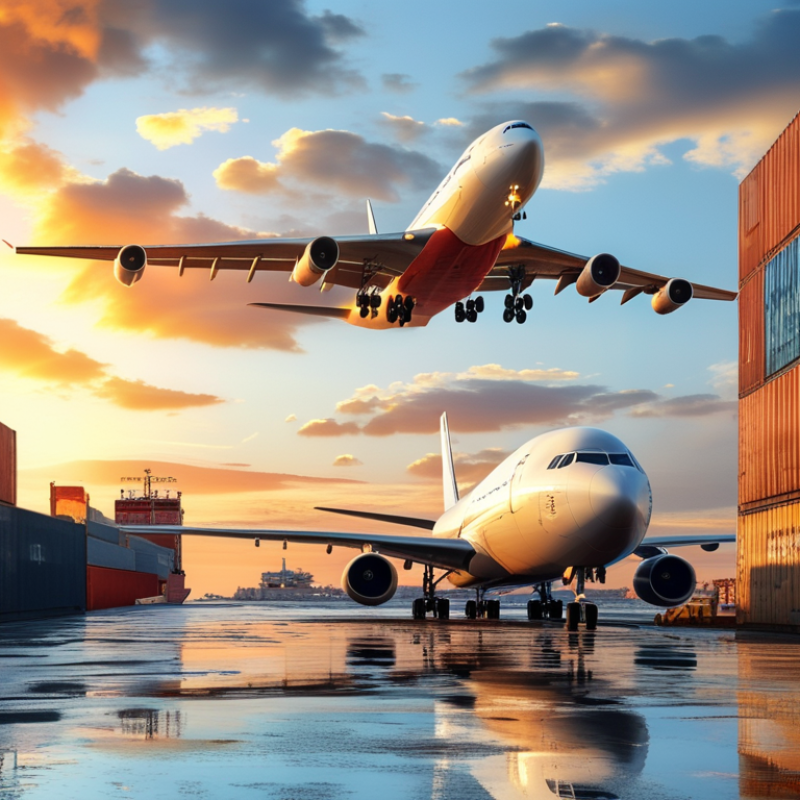
Why Does Air Freight Cost More Than Sea Freight?
Air freight means moving cargo by aircraft between airports. It suits shipments that need speed, careful handling, or frequent tracking. A small carton of medical equipment may reach another country within days. However, space inside an aircraft is limited. Weight and volume can quickly increase the freight rate.
Sea freight means transporting cargo by vessel between seaports. It is designed for larger loads, including pallets, machinery, and full containers. A container may travel for several weeks, depending on the route and port conditions. Ships carry far more cargo than aircraft, so the transportation cost is usually lower per unit. Sea freight also uses more steps, such as port loading, customs processing, and inland delivery.
The difference is not only about speed. Air cargo needs strict schedules, airport security, fuel planning, and specialized ground handling. Sea cargo may face congestion, rough weather, or delays at busy terminals. In shipment planning, I have found that the cheapest transport mode is not always the best choice. A delayed ocean container can create storage fees or empty shelves. Still, air freight can be wasteful when the goods are stable and the deadline is flexible. The comparison is imperfect. Cargo value, urgency, size, route, and delivery risks must be reviewed together.
| Comparison Dimension | Air Freight | Sea Freight | Why the Difference Matters |
|---|---|---|---|
| Basic Meaning | Goods are transported by cargo aircraft or by using available capacity in passenger aircraft. | Goods are transported by ocean vessels, either in a full container or as shared container cargo. | Both are international transport methods, but they use different infrastructure, schedules, and cost structures. |
| Typical Transport Cost | Approximately US$4–US$12 per chargeable kilogram for general international cargo, before some local and customs charges. | Approximately US$0.07–US$0.21 per kilogram when a 20-foot container is loaded with about 28,000 kg and the ocean portion costs roughly US$2,000–US$6,000. | Aircraft have higher operating, fuel, maintenance, and airport-handling costs. Ships spread costs across much larger cargo volumes. |
| Cost Calculation Basis | Usually charged by the greater of actual weight or volumetric weight. A common air-freight conversion is 1 cubic meter = 167 chargeable kilograms. | Usually charged by container, cubic meter, or shipment type. Full-container shipments are commonly priced by the container rather than by each kilogram. | Large, dense, and non-urgent cargo generally benefits more from sea-freight pricing. |
| Typical Transit Time | About 1–5 days for the airport-to-airport movement, excluding pickup, customs clearance, and final delivery. | About 25–45 days for the port-to-port movement on many long-distance routes, excluding inland transport and clearance. | Air freight is selected when speed has a higher business value than transport savings. |
| Capacity | More limited by aircraft payload, cargo-door dimensions, flight schedules, and aircraft availability. | Very high capacity; a large container vessel can carry many thousands of standard containers. | Sea freight is more suitable for bulk goods, heavy machinery, furniture, and high-volume replenishment. |
| Fuel and Operating Intensity | High energy use per kilogram because aircraft must overcome gravity and air resistance at high speed. | Lower energy use per kilogram because ships carry large quantities efficiently over long distances. | The energy advantage of ocean shipping is a major reason its line-haul cost is usually lower. |
| Approximate Transport Emissions | Often around 0.5–2.0 kg CO₂e per kilogram of freight, depending on aircraft type, route, load factor, and calculation method. | Often around 0.01–0.10 kg CO₂e per kilogram of freight for containerized ocean transport, depending on vessel, route, speed, and load factor. | Sea freight typically produces substantially lower emissions per kilogram, although the exact result varies by route and shipment details. |
| Reliability and Schedule | Frequent departures on major trade lanes, but flights may be affected by weather, capacity limits, and airport disruptions. | Fixed sailing schedules, but port congestion, weather, vessel delays, and schedule changes can create longer disruptions. | Air freight usually offers faster recovery from delays, while sea freight requires more inventory planning. |
| Best-Suited Cargo | High-value, lightweight, perishable, urgent, seasonal, or time-sensitive products. | Heavy, bulky, non-perishable, lower-value, or large-volume products. | The best mode depends on the total cost of transport, inventory, warehousing, stockouts, and product value. |
| Packaging Requirements | Packaging should be lightweight while protecting goods from repeated handling, vibration, pressure changes, and rapid transfer. | Packaging must withstand longer exposure to vibration, humidity, condensation, stacking, and multiple port-handling stages. | Sea freight may require stronger moisture protection, while air freight places greater emphasis on low dimensional weight. |
| Door-to-Door Considerations | Airport charges, security screening, fuel surcharges, customs fees, handling, and inland delivery can materially increase the final price. | Origin and destination port charges, documentation, customs, terminal handling, container fees, and inland delivery can materially increase the final price. | The advertised line-haul rate is not always the same as the final landed logistics cost. |
| Practical Decision Rule | Choose air freight when delivery speed, product availability, or the cost of delay justifies the premium. | Choose sea freight when minimizing transport cost and emissions is more important than rapid delivery. | Compare the complete door-to-door cost and required delivery date rather than comparing only the basic freight rate. |
Air freight moves cargo within days, but aircraft use more fuel and offer less space. Speed costs more.
Choose it for urgent parts, seasonal products, or temperature-sensitive goods. A factory shutdown may cost more than higher freight charges.
Sea freight suits heavy, bulky, and predictable shipments. A container can carry thousands of kilograms at a lower unit cost.
Aircraft space is limited by weight and volume. A bulky pallet may fill space before reaching the weight limit.
Ships carry thousands of containers on one voyage. Operating costs spread across many shipments.
Yes. Seasonal demand, airport handling, security checks, and connecting flights can increase rates.
Port congestion, weather delays, customs checks, and storage charges may extend delivery. Plans can fail.
Compare freight, fuel, insurance, handling, storage, transit risk, and missed-sales costs. The quoted price is not the whole price.
Yes. High-value goods often justify air freight when delivery time matters. Low-value bulk goods usually favor sea freight.
Sometimes. A delayed container may create storage fees or stop production. I may underestimate this risk without a complete cost review.
Why does air freight cost more than sea freight? The main reason is that air cargo depends on faster, more complex operations and higher fuel consumption. Air freight moves goods by aircraft, offering rapid delivery and reliable connections between distant locations, while sea freight transports larger volumes by vessel at a slower pace. These different operating models strongly influence pricing.
Aircraft have limited cargo capacity compared with ships, and their fuel, maintenance, handling, security, and airport processing costs are generally higher. Airlines must also prioritize speed, which requires carefully coordinated schedules and time-sensitive services. Sea transport benefits from greater capacity and lower energy costs per unit, making it more economical for heavy or non-urgent shipments. However, air freight may be the better choice for valuable, lightweight, or time-critical goods, while sea freight is usually more suitable for bulky cargo, flexible delivery schedules, and cost-conscious logistics planning.

 LG Logistics