Optimized transport options connecting major manufacturing ports to Latvia's central logistics hubs.
An authoritative analysis of shipping routes, local economic demands, and regulatory considerations in the Baltic region.
Latvia serves as a critical logistics and transit corridor within the Baltic Sea region. Boasting three major ice-free ports—The Freeport of Riga, Ventspils Port, and Liepaja Port—it represents a central trade gateway linking manufacturing giants in China with consumption centers throughout Northern Europe, Poland, and Scandinavia.
As a member of the European Union, Latvia offers high-standard customs infrastructure, direct rail links stretching eastwards across Eurasia, and simplified customs clearance processes for import distribution.
Procuring directly from industrial manufacturing centers in China (including Guangdong, Zhejiang, and Jiangsu) requires a robust logistics partner. LG SwiftLogix coordinates directly with manufacturing lines to aggregate raw materials, electronics, furniture, and heavy industrial products, managing containerized loads to ensure damage-free transit.
Through specialized consolidated sea freight (LCL) and full container configurations (FCL), importers gain scalable shipping volumes tailored to their production cycles.
Navigating EU customs requires strict adherence to regional standards. The import process into Latvia entails proper EORI number activation, classification under precise TARIC codes, and the management of Single Administrative Documents (SAD).
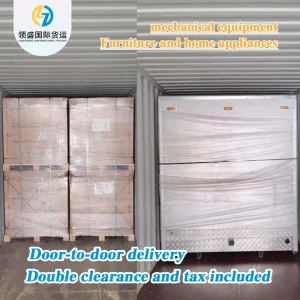
By leveraging our specialized DDP (Delivered Duty Paid) and DDU models, Baltic enterprises can benefit from optimized customs procedures, including potential import VAT deferral schemes available under Latvia's flexible customs code.
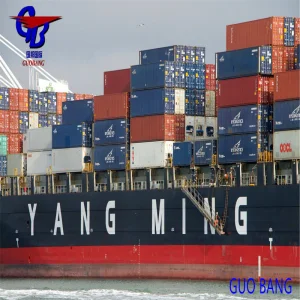
Shipping sea freight from China's primary shipping terminals (Shenzhen, Shanghai, Ningbo, Qingdao) to Latvian ports typically involves navigating standard Eurasian shipping corridors. Container vessels traverse the South China Sea, cross the Indian Ocean, pass through the Suez Canal, enter the Mediterranean, and navigate upwards around Western Europe into the North Sea and the Baltic Sea. The typical transit duration ranges between 35 and 45 days, depending on carrier routes, seasonal factors, and port congestion.
| Origin Region (China) | Destination Port (Latvia) | Average Transit Time (FCL) | Standard Shipping Route type | Key Document Requirements |
|---|---|---|---|---|
| Shenzhen / Yantian Hub | Freeport of Riga | 35 - 38 Days | Suez Route / Baltic Hub Transshipment | Bill of Lading, Packing List, Commercial Invoice, EUR1 |
| Ningbo-Zhoushan Port | Ventspils Port | 38 - 42 Days | Direct Ocean Carrier with feeder connection | SAD, EORI registration, CoO (Certificate of Origin) |
| Shanghai / Yangshan Deepwater | Liepaja Port | 40 - 45 Days | Eurasian Sea-Rail or Intermodal transshipment | Import licenses for electronics / machinery |
| Qingdao Port | Riga Container Terminal | 42 - 47 Days | Multi-carrier maritime loop | Full transit security declarations |
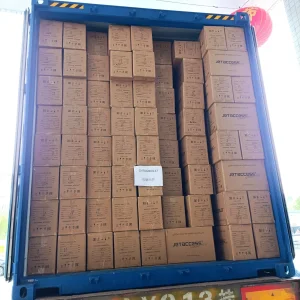
To secure the best freight economics, shippers must choose between FCL (Full Container Load), which offers dedicated usage of 20GP, 40GP, or 40HQ containers, and LCL (Less than Container Load), where multiple shipments share a single container space. LCL shipping requires careful consolidation processing to ensure that cargo is not damaged by heavy industrial products during loading at shipping hubs in China.
Shenzhen LG Logistics Co., Ltd. & flagship brand LG SwiftLogix
Shenzhen LG Logistics Co., Ltd. is a premier provider of comprehensive logistics solutions, specializing in FBA Amazon shipping, air freight, and sea freight services. Operating under its flagship brand LG SwiftLogix, the company has built a reputation for reliability, speed, and efficiency in global e-commerce logistics. Headquartered in Shenzhen, China, LG Logistics leverages its strategic location and advanced supply chain infrastructure to offer seamless shipping solutions for businesses of all sizes.
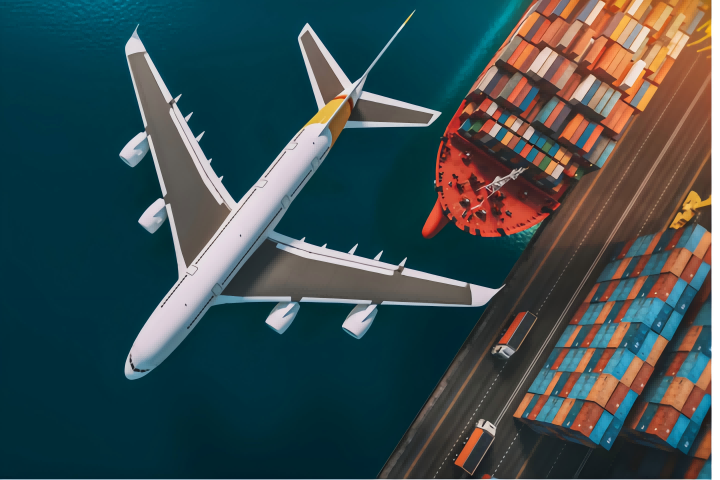
The company’s service portfolio includes Amazon FBA preparation and labeling, warehouse management, customs clearance, and both air and sea freight options, including LCL (Less than Container Load) and FCL (Full Container Load) shipping. By integrating smart logistics management systems and real-time tracking, Shenzhen LG Logistics ensures that shipments reach their destinations safely, on time, and cost-effectively.
Committed to supporting cross-border e-commerce, the company provides expert consulting for import/export compliance, risk management, and multi-modal transportation strategies. With a focus on customer satisfaction, operational efficiency, and innovative logistics solutions, Shenzhen LG Logistics Co., Ltd. empowers businesses to expand globally with confidence.
Through its dedication to excellence, technology-driven operations, and comprehensive logistics expertise, Shenzhen LG Logistics continues to redefine global supply chain solutions, helping clients optimize delivery, reduce costs, and enhance the overall shipping experience.
Explore our specialized cargo pathways and global freight options designed to integrate with European logistics infrastructure.
We deploy advanced logistics technologies alongside deep regulatory familiarity to ensure risk-free maritime supply chains.
Marine shipping involves variables ranging from rough seas to port strikes. LG SwiftLogix provides complete Marine Cargo Insurance policies coverage, protecting the cargo valuation at 110% of commercial invoices, and conducts secure packaging audits at factory gates in China.
Every shipment dispatched under the LG SwiftLogix brand is tracked using integrated sensor devices. This permits live updates on container position, humidity variance, temperature deviations, and security hatch status directly via web portals or API dashboards.
We operate physical sorting terminals in key industrial zones across China. This guarantees that freight coming from remote inland factories is properly cross-docked, consolidated, and containerized under the direct oversight of our certified warehouse agents.
Get authoritative answers to critical compliance, transit, cost, and logistics questions.
Secure premium freight space, request real-time pricing grids, or consult our logistics compliance team now.
Send Inquiry Now LG Logistics